









































Author: Mycond Technical Department
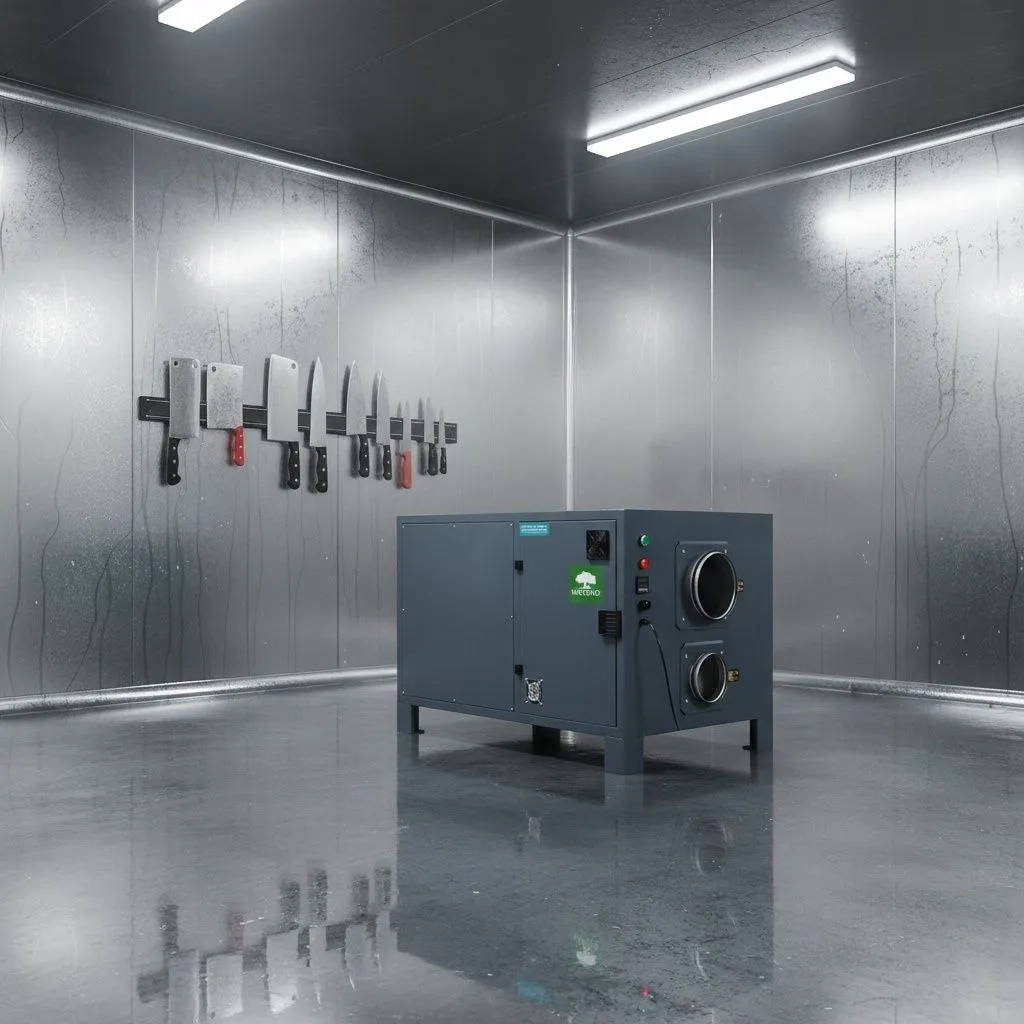
Modern environmental test chambers are complex technological systems that allow modeling various climatic conditions for testing materials, components, and finished products. Precise humidity control over a wide temperature range is one of the most challenging engineering tasks in designing such chambers, especially when it comes to rapid parameter changes and dynamic operating modes.
Specifics of environmental test chambers as a humidity-control object
Modern test chambers operate over an extremely wide temperature range: from -70°C to +180°C, depending on the chamber type and purpose. The range of relative humidity is also impressive — from 10% to 98%. These parameters are regulated by international testing standards such as IEC, MIL-STD, ASTM, and others.
A distinctive feature of climate chambers is the strict accuracy requirements for parameter maintenance — typically ±2–3% relative humidity. However, the key challenge for humidity control systems is not so much maintaining static modes as ensuring the specified rate of change of parameters, which can reach several degrees per minute during temperature transitions.
The small working volume of chambers (typically from 0.5 to 10 m³) creates additional challenges — lower thermal and moisture inertia makes the system more sensitive to fluctuations and requires a faster response from dehumidification systems. It is worth noting that all the ranges given are indicative and depend on the specific type of chamber and the testing standard.
Process physics: relationship between temperature, relative, and absolute humidity under dynamic modes
Understanding psychrometric processes is fundamental for designing dehumidification systems in climate chambers. During abrupt temperature changes, complex transformations occur in the air’s moisture parameters, which can be clearly illustrated with the Mollier h–d diagram.
The key dependency to consider in dynamic modes is the change in relative humidity with temperature variation, even at constant absolute moisture content. This dependency is expressed by the equation:
varphi = frac{d cdot P}{0.622 cdot P_s(t)}
where varphi is the relative humidity, d is the absolute humidity (g/kg of dry air), P is the atmospheric pressure (Pa), and P_s(t) is the saturated vapor pressure at temperature t (Pa).
The dependence of air moisture capacity on temperature is determined by the Mendeleev–Clapeyron equation, which for water vapor in air can be expressed as:
d_{max} = 0.622 cdot frac{P_s(t)}{P - P_s(t)}
where d_{max} is the maximum moisture content of air at temperature t (g/kg of dry air).
A key point for understanding the operation of climate chambers: when air is heated, relative humidity drops even with unchanged absolute moisture content. For example, if air with a relative humidity of 50% at 20°C is heated to 40°C without adding or removing moisture, its relative humidity will decrease to approximately 18%. This is a fundamental phenomenon that must be considered when calculating dehumidification systems for dynamic modes.
Technical limitations of condensation dehumidification in climate chambers
Condensation dehumidification, which is based on cooling the air below the dew point followed by moisture condensation, has a number of fundamental limitations when applied in climate chambers.
The main limitation is the inability to operate at temperatures below the freezing point of the condensate, i.e., below 0...+3°C. At lower temperatures, the condensate freezes on the surface of the evaporator, sharply reducing heat exchange efficiency and blocking the dehumidification process.
The inertia of condensation systems is a critical factor for dynamic modes. Due to the thermal inertia of the evaporator, the performance change time is from 5 to 15 minutes, depending on the heat exchanger mass. This delay is often unacceptable for test chambers with rapid parameter change requirements.
An additional limitation is the fundamental inability to maintain a dew point below +3...+5°C for most condensation systems due to refrigeration cycle constraints. This limits the lower bound of achievable humidity, especially at low temperatures.
The performance of condensation dehumidification is significantly dependent on the evaporator temperature according to the thermodynamic laws of the refrigeration cycle. As the evaporator temperature decreases, the cooling capacity increases, but the energy efficiency of the system decreases.
It should be noted that all temperature thresholds and time intervals given are typical engineering practice guidelines and require clarification for specific equipment.
Adsorption dehumidification: advantages and technical challenges for dynamic modes
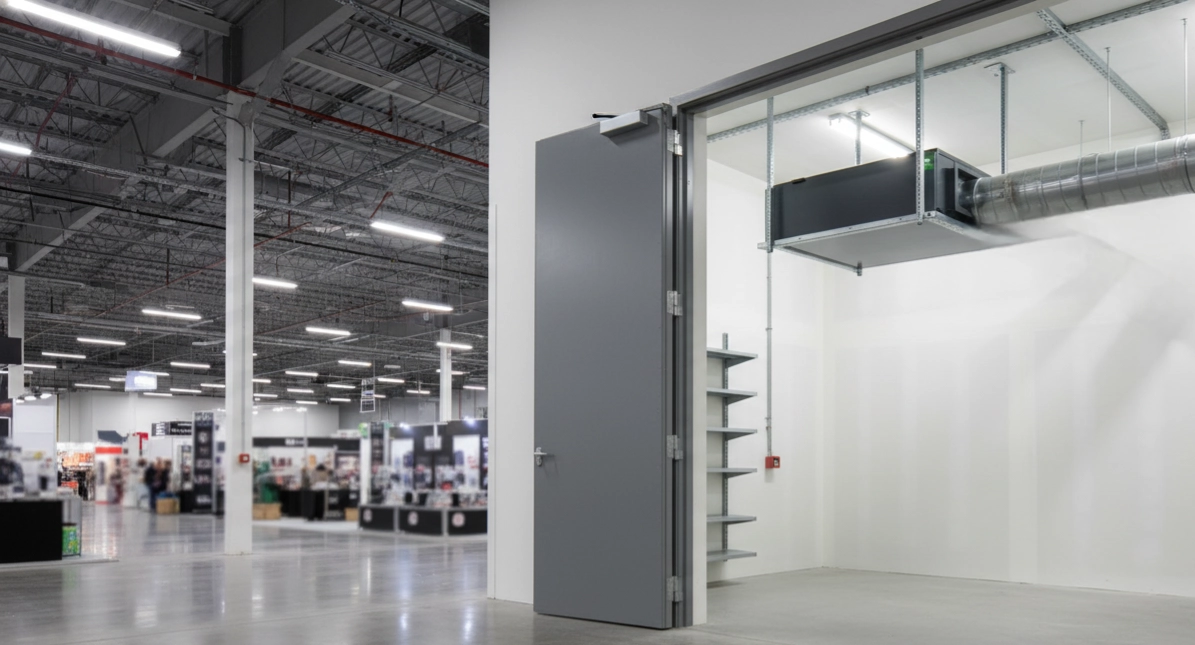
Adsorption dehumidifiers have significant advantages for climate chambers due to their ability to operate over a wide range of temperatures — from -70°C to +80°C. They can provide dew points down to -70°C for silica gel systems, which is critically important for low-temperature testing.
However, the key technical challenge of adsorption systems is the desiccant regeneration time, which ranges from 20 to 180 minutes depending on the type of adsorbent and the degree of saturation. In dynamic modes, this can become a limiting factor.
Adsorption efficiency is determined by adsorption isotherms — graphs of adsorption capacity versus relative humidity at a given temperature. Different types of desiccants (silica gel, zeolite, molecular sieves) have different characteristics:
- Silica gel is effective at high relative humidity (>50%)
- Zeolites work more efficiently at low humidity (<30%)
- Molecular sieves provide the deepest drying but have limited capacity
Adsorption capacity depends significantly on the regeneration temperature, which increases with temperature rise from 120°C to 180°C for different adsorbents. Higher regeneration temperatures provide deeper drying but require higher energy consumption.
Specific values of adsorption capacity and regeneration time depend on the adsorbent manufacturer and operating conditions, so they need to be clarified for each project.
Methodology for calculating dehumidification capacity for climate chambers
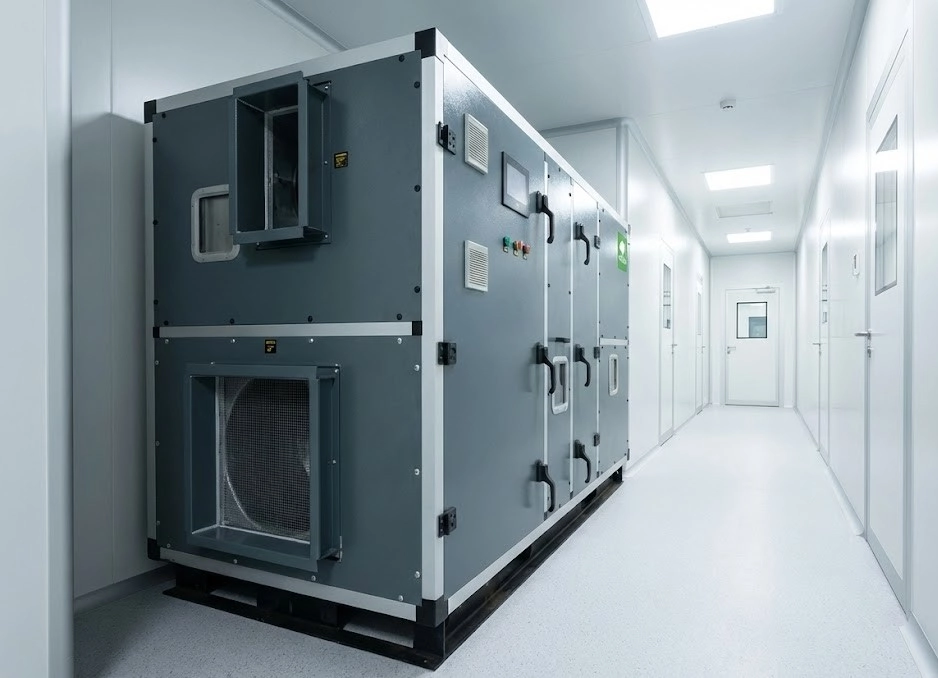
The calculation of the dehumidification system capacity for climate chambers begins with determining the moisture load during mode changes. It is calculated by the formula:
W = (d_{1} - d_{2}) cdot V cdot rho
where W is the amount of moisture to be removed (g); d_{1}, d_{2} are the initial and final absolute humidity (g/kg of dry air); V is the chamber volume (m³); rho is the air density (kg/m³).
The required moisture removal rate (g/h) is determined as:
dot{W} = frac{W}{Delta tau}
where Delta tau is the specified time for changing the humidity mode (h).
The algorithm for selecting the type of dehumidification can be presented as follows:
- If temperature > +5°C AND dew point > 0°C → condensation dehumidification is possible
- If temperature < +5°C OR dew point < -10°C → adsorption dehumidification is required
- In other cases → a combined system is recommended
For dynamic modes, it is necessary to consider a safety factor ranging from 1.3 to 1.8 depending on the rate of parameter change:
dot{W} = k cdot dot{W}
where dot{W} is the calculated dehumidifier capacity (g/h); k is the safety factor.
System response time and inertia factors
The overall response time of the dehumidification system is a critical parameter for dynamic operating modes of climate chambers and consists of several components.
The thermal inertia of a condensation evaporator depends on its mass and the material’s heat capacity. The thermal response time of the evaporator (
) can be approximately estimated by the formula:
where
is the evaporator mass (kg);
is the specific heat capacity of the material (J/(kg·K));
is the required temperature change (K);
is the thermal power (W).
For adsorption systems, the key factor is the regeneration time of the rotor or cassettes, which determines the minimum operating cycle. Depending on the type of adsorbent, this time ranges from 20 to 180 minutes.
Transport delay in air ducts is calculated as:
where
is the volume of the air ducts (m³);
is the airflow rate (m³/s).
The inertia of humidity sensors should also be considered, as it ranges from 30 seconds to 3 minutes depending on the sensor type and air velocity.
The total time to reach the set mode is determined as the sum of all inertia components:
Specific inertia times depend on the system design and operating mode.
Typical engineering mistakes and misconceptions
When designing dehumidification systems for climate chambers, specialists often make common mistakes that lead to unsatisfactory equipment performance.
One of the most common mistakes is selecting a dehumidifier solely by chamber volume without considering the rate of parameter change. This leads to insufficient performance during transient modes when the system fails to remove moisture at the required rate.
Another common mistake is using condensation dehumidification for low-temperature chambers operating below 0°C. Under such conditions, condensate freezes on the evaporator surface, blocking heat transfer and stopping dehumidification.
Ignoring changes in relative humidity with temperature changes (even with constant absolute humidity) often leads to incorrect capacity calculations. This results from a lack of understanding of fundamental psychrometric relationships.
The misconception that ±2% relative humidity accuracy is achievable at any rate of temperature change does not account for the inertia of the entire system. In reality, the higher the rate of temperature change, the more difficult it is to ensure the specified accuracy.
Frequently asked questions (FAQ)
Q: Why does relative humidity drop when air is heated from 0°C to +60°C even without dehumidification?
A: This is explained by fundamental psychrometric laws. When air is heated at constant absolute humidity, its relative humidity decreases because the moisture capacity of air increases with temperature. For example, if air at 0°C had a relative humidity of 50% (corresponding to an absolute humidity of approximately 1.9 g/kg), then when heated to +60°C its relative humidity will drop to approximately 3.2% without moisture removal.
Q: How to determine the time for a combined system to reach the set mode?
A: The total time to reach the mode is determined as the sum of all delay components: the thermal inertia of the evaporator, the adsorbent regeneration time, the transport delay in air ducts, and the inertia of humidity sensors. For a combined system, it is necessary to consider the slowest link, which usually determines the overall response time.
Q: Is a buffer receiver necessary for small-volume chambers?
A: For small-volume chambers (less than 2 m³), a buffer receiver is especially important because with small volumes, parameter changes occur faster, and the dehumidification system finds it more difficult to keep up with these changes. Criteria for the necessity of buffering are: rate of mode change greater than 5°C/min, humidity control accuracy requirements better than ±3%, and short transition time between modes.
Conclusions
The selection of a dehumidification system for environmental test chambers is a complex engineering task defined by the operating temperature range, required dew point, and rate of mode changes. In design, it is necessary to consider psychrometric processes at variable temperatures, especially changes in relative humidity during heating and cooling.
The key to successful design is the correct calculation of the system response time as the sum of thermal inertia, transport delay, and regeneration time. For a wide temperature range, the optimal solution is usually combined systems with the ability to switch between condensation and adsorption modes.
To ensure the specified accuracy under dynamic modes, it is critically important to consider all components of system inertia. Each application requires an individual approach that takes into account the specific requirements of testing standards and equipment features.


