









































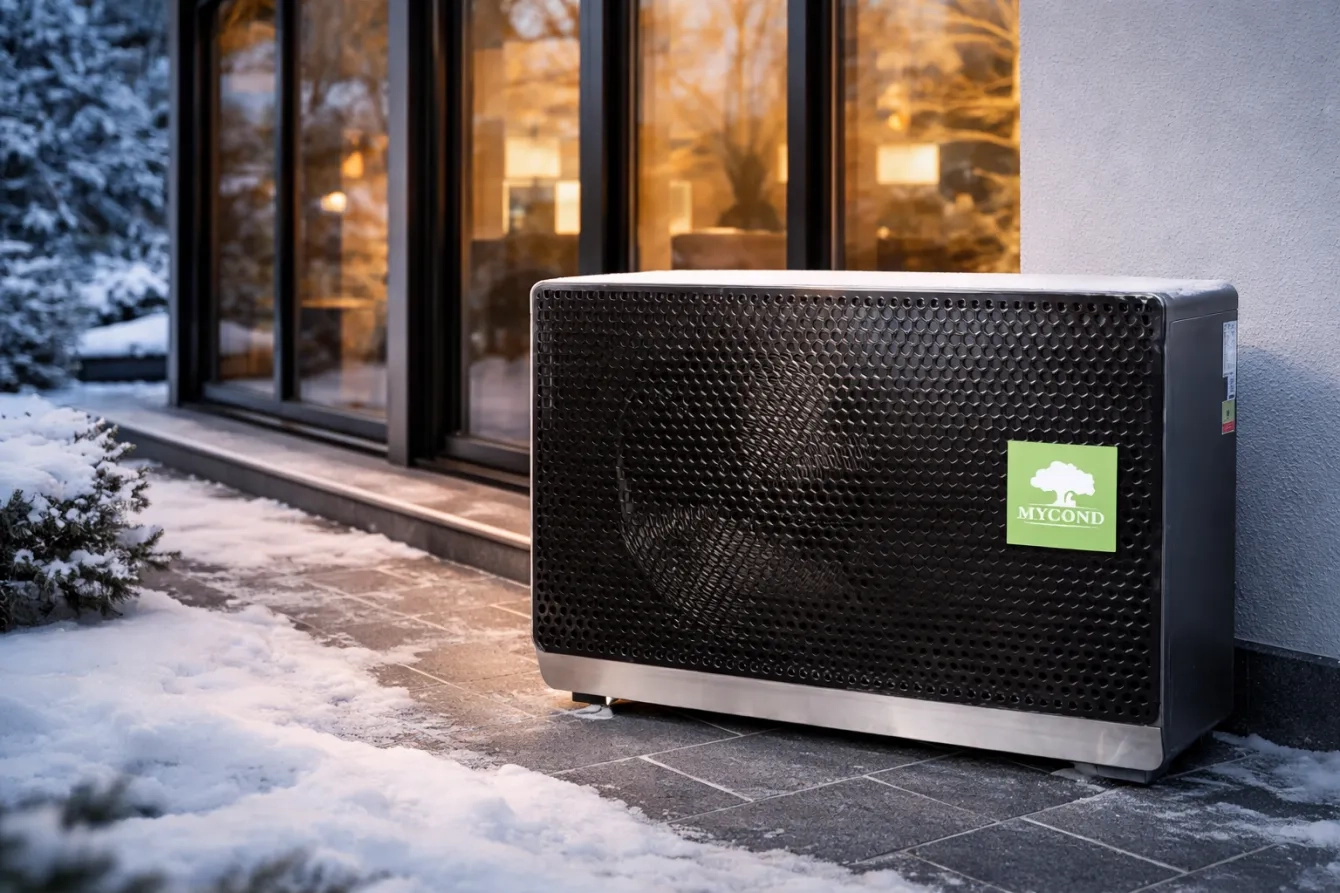
Plug either of these into a wall socket, connect it to your heating circuit, bolt the outdoor unit to a bracket — the setup is identical. Compressor outside, hydronic module inside, R32 looping between them, 230V single-phase supply. Rated output: just under 6.4 kW for the Mycond, exactly 6.0 kW for the LG. Same league, same job description.
There is one important caveat that cannot be ignored: the Mycond was certified in April 2024 under Keymark rules Rev 13, while the LG was certified back in March 2019 under Rev 7. Over those five years, the methodology underwent several meaningful revisions — which means that some figures, SCOP in particular, may have been calculated using different algorithms. Where the gap between the two models is narrow, this will be flagged explicitly. Where one model leads clearly, the advantage stands regardless of ruleset version.
1. Introduction: Why HP KEYMARK Matters
When shopping for a heat pump, buyers are typically confronted with COP and SCOP figures in marketing brochures — but where do those numbers come from, and who verified them? That is precisely what the HP KEYMARK scheme exists to answer.
What HP KEYMARK does is simple: it takes a manufacturer's spec-sheet claims and runs them through a third-party lab that has no commercial interest in the result. The lab measures efficiency under EN 14511 (fixed test point), EN 14825 (seasonal weighted average, i.e. SCOP), and EN 12102 (noise). Whatever the lab records goes on the certificate — good or bad. Without this, the COP printed in the brochure is just a number someone typed.
For buyers, this matters for several reasons. In many EU countries, a valid Keymark certificate is a prerequisite for receiving government subsidies on heat pump installation. The SCOP figure from the certificate is also the only legally valid number for energy labelling purposes. And crucially, it allows honest comparison across different manufacturers — same methodology, same test conditions, independent laboratory.
This article compares two split heat pumps in the ~6 kW class: the Mycond BeeSmart MHCS 035 NBS/UBS and the LG Therma V R32 Split (HU091MR U44 + HN0916M NK4, physical compressor rated at 9 kW, Prated 6.00 kW). The analysis is based exclusively on certificate data — no marketing materials involved.
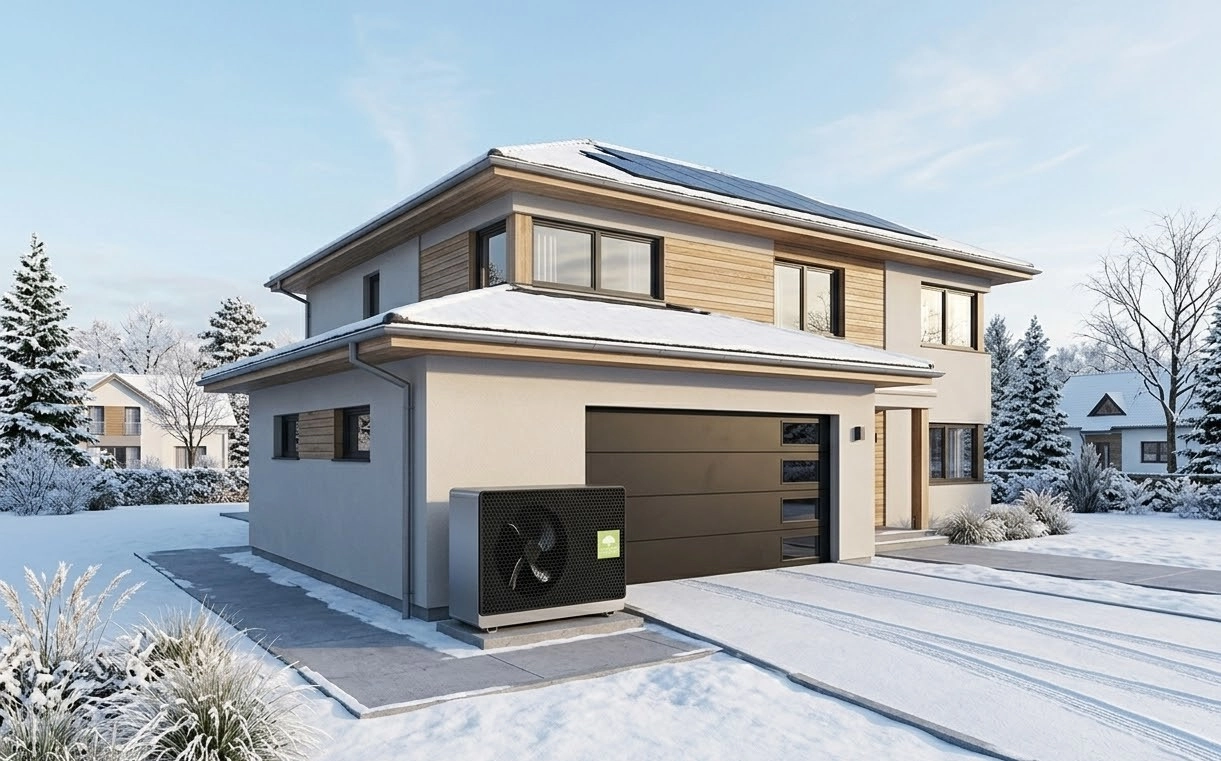
2. Device Identification
| Parameter | Mycond BeeSmart | LG Therma V |
|---|---|---|
| Manufacturer | MYCOND Limited | LG Electronics Inc. |
| Model | MHCS 035 NBS / MHCS 035 UBS | HU091MR U44 + HN0916M NK4 |
| Certification body | BRE Global Limited | DIN CERTCO |
| Certificate number | 041-K088-04 | 011-1W0315 |
| Certification date | 03.04.2024 | 05.03.2019 |
| Keymark rules version | Rev 13 | Rev 7 |
| Heat pump type | Outdoor Air/Water (split) | Outdoor Air/Water (split) |
| Refrigerant | R32 | R32 |
| Refrigerant charge | 1.4 kg | 1.5 kg |
| Compressor type | DC Inverter | DC Inverter |
| Power supply | 1×230V 50Hz | 1×230V 50Hz |
| Units | Indoor + Outdoor | Indoor + Outdoor |
The table confirms what the introduction suggested: two machines that share every meaningful design parameter. R32 inverter compressors, split configuration, identical supply voltage. Comparing them on performance is fair ground.
⚠️ One thing to watch: these certificates are five years apart, and the underlying ruleset changed between them — Rev 13 for Mycond, Rev 7 for LG. For figures where the two models sit close together, that gap in methodology is worth keeping in mind.
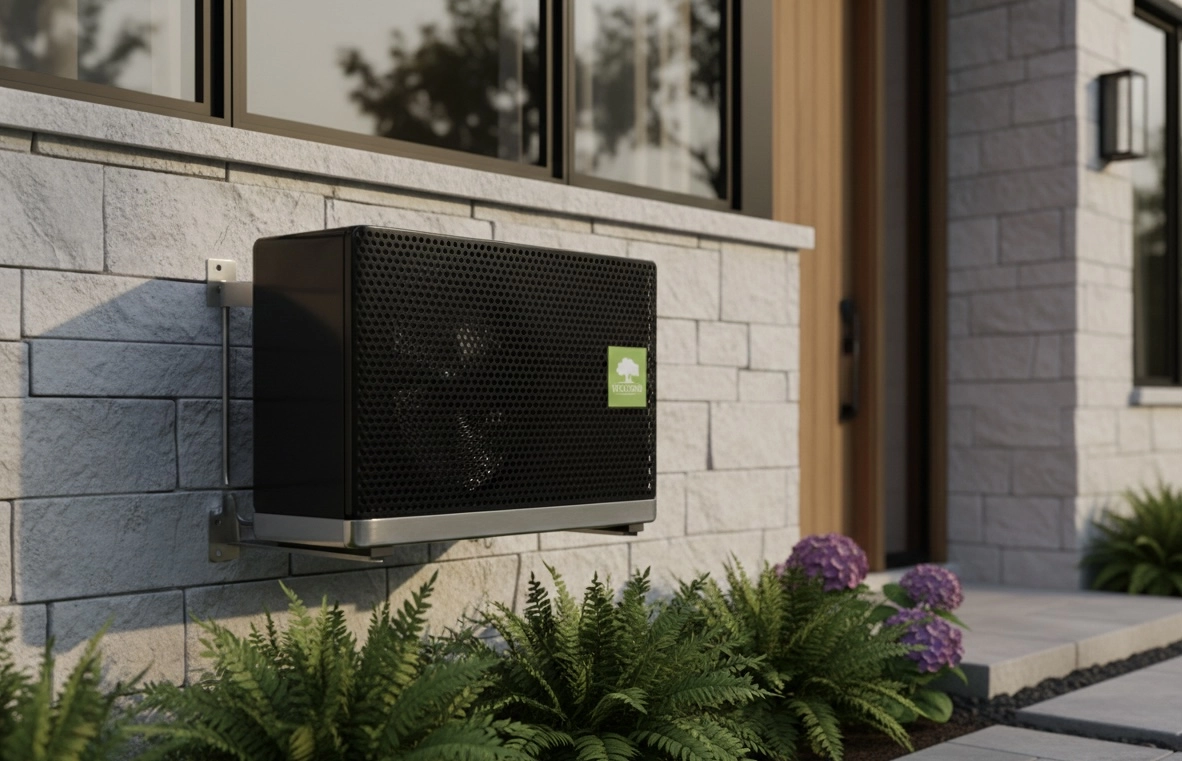
3. Rated Capacity and Design Parameters
Start here before anything else. These parameters set the outer limits — what building load can this unit actually handle, and down to what outdoor temperature does it keep working?
| Parameter | Description | Mycond LT | Mycond MT | LG LT | LG MT |
|---|---|---|---|---|---|
| Prated | Rated heating capacity per EN 14825 | 6.39 kW | 5.97 kW | 6.00 kW | 6.00 kW |
| Tbiv | Reference bivalence temperature for SCOP calculation (EN 14825) | −7°C | −7°C | −10°C | −7°C |
| TOL | Minimum outdoor operating temperature | −10°C | −10°C | −15°C | −15°C |
| WTOL | Max. water outlet temperature at TOL | 57°C | 57°C | 65°C | 65°C |
| Psup | Supplementary electric heater capacity at T TOL (EN 14825) | 1.07 kW | 1.17 kW | 0.00 kW | 0.90 kW |
Jump straight to TOL and the gap is obvious: Mycond cuts out at −10°C, LG carries on to −15°C. In a monovalent setup — no backup heater, the pump alone covers everything — that extra five degrees is genuinely useful. But there is an important asterisk here.
ℹ️ On Tbiv and the real bivalence point: The Tbiv in an HP KEYMARK certificate is a reference parameter for the EN 14825 standard house calculation — not the actual bivalence point of a specific installation. A system designer determines the real bivalence point based on the building's heat loss, the pump's capacity, and the chosen heating strategy.
In the vast majority of real bivalent systems, the bivalence point is set around −7°C — meaning a backup heater kicks in below that temperature regardless, and what happens at −10°C or −15°C has little practical effect on actual energy bills. For these systems, the difference in TOL between the Mycond and LG is more of a marketing talking point than a meaningful practical advantage.
The WTOL difference — 57°C for Mycond vs. 65°C for LG — is more tangible for systems with conventional radiators that require higher water temperatures during the coldest periods.
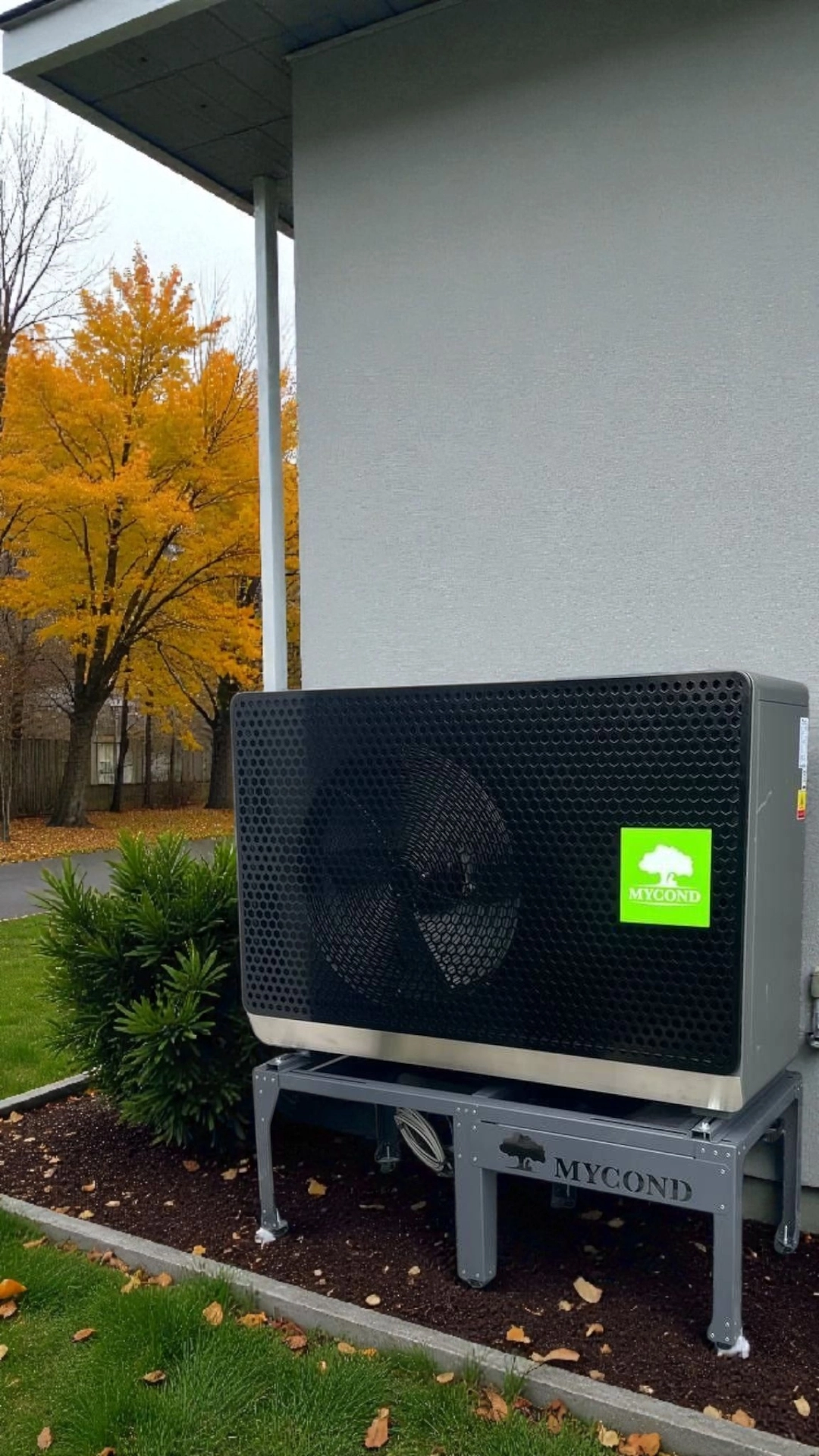
4. COP Values per EN 14511 and EN 14825
EN 14511 — Rated COP Under Standard Conditions
This is measured at A7/W35 (LT) and A7/W55 (MT) — i.e., with +7°C outdoor air. Think of it as the laboratory benchmark under optimal conditions.
| Parameter | Mycond LT | Mycond MT | LG LT | LG MT |
|---|---|---|---|---|
| Heat output | 5.72 kW | 8.04 kW | 9.00 kW | 5.50 kW |
| Electrical input | 1.09 kW | 3.16 kW | 1.94 kW | 2.04 kW |
| COP | 5.26 | 2.54 | 4.65 | 2.70 |
Low-temperature mode tells a clear story: running at +7°C outdoor air into a 35°C circuit, Mycond lands at COP 5.26 while LG manages 4.65. Switch to high-temperature operation (55°C circuit) and LG posts 2.70 against Mycond's 2.54 — but note the heat output at that test point: Mycond was pushing out 8.04 kW versus LG's 5.50 kW. The units were operating under different loads, which muddies any straightforward reading of who "won" MT efficiency.
EN 14825 — Seasonal COP Data Points
The table below breaks down efficiency at each of the five test temperatures used in EN 14825.
| Point | Outdoor temp | Mycond COP LT | Mycond COP MT | LG COP LT | LG COP MT | Winner LT | Winner MT |
|---|---|---|---|---|---|---|---|
| A | −7°C | 3.19 | 1.94 | 2.75 | 2.05 | Mycond | LG |
| B | +2°C | 4.43 | 3.34 | 4.50 | 3.10 | LG (marginal) | Mycond |
| C | +7°C | 6.36 | 4.60 | 6.50 | 4.50 | LG (marginal) | Mycond |
| D | +12°C | 8.37 | 6.49 | 9.00 | 6.80 | LG | LG |
| E (TOL) | −10/−15°C | 2.82 | 1.71 | 2.45 | 1.65 | Mycond | Mycond |
Neither model sweeps the table. What you get instead is a split by temperature range: Mycond runs more efficiently when it is actually cold outside, LG when the weather is mild. At point A (−7°C, LT), Mycond's 3.19 vs. LG's 2.75 is a 16% advantage — on a frosty January morning, that translates directly into fewer kilowatt-hours consumed per unit of heat delivered.
Points B (+2°C) and C (+7°C) carry the most weight in terms of seasonal operating hours — the bulk of energy consumption accumulates here. In these points, the gap is minimal or leans slightly toward LG (LT) or Mycond (MT).
5. SCOP — Seasonal Efficiency
SCOP takes all those individual efficiency readings and weights them by how many hours each outdoor temperature actually occurs across a heating season. A COP of 9.0 at +12°C barely moves the needle if your climate rarely sees +12°C in winter. That weighting is why SCOP tracks real bills — not the best-case test result.
| Metric | Mycond LT | Mycond MT | LG LT | LG MT |
|---|---|---|---|---|
| SCOP | 4.61 | 3.32 | 4.65 | 3.23 |
| ηs (%) | 181% | 130% | 183% | 126% |
LT mode — underfloor heating, low-temperature radiators — goes to LG by the thinnest margin: 4.65 vs. 4.61. Under 1%, five years between certifications, a changed ruleset. Not a result to build purchasing decisions on.
MT mode goes to Mycond: 3.32 vs. 3.23. A 2.7% difference with no methodological asterisk next to it.
Scaled to a house needing 15,000 kWh of heat per year:
- LT: Mycond ~3,250 kWh/year, LG ~3,226 kWh/year. The difference is 24 kWh — less than a single day of heating. Not worth factoring into a purchase decision.
- MT: Mycond ~4,518 kWh/year, LG ~4,644 kWh/year. Here the gap is 126 kWh/year in Mycond's favour — worth multiplying by your electricity tariff.
6. Annual Energy Consumption Qhe and Degradation Coefficient Cdh
Qhe is the calculated annual electricity consumption for the reference house. Cdh is the part-load efficiency degradation coefficient — in both models it is 0.900 across all points, which is typical for inverter compressors.
| Metric | Description | Mycond LT | Mycond MT | LG LT | LG MT |
|---|---|---|---|---|---|
| Qhe | Annual electricity consumption, reference house | 2,864 kWh | 3,720 kWh | 2,666 kWh | 3,837 kWh |
| Cdh | Part-load efficiency degradation coefficient | 0.900 | 0.900 | 0.90 | 0.90 |
LT: LG uses 2,666 kWh/year, Mycond 2,864 kWh — a 198 kWh gap that matches the SCOP LT result.
Swap to MT and the order reverses: Mycond at 3,720 kWh/year, LG at 3,837 kWh. A 117 kWh annual advantage for Mycond — apply your local tariff to see what that means in euros or pounds.
The 0.900 Cdh is the same for both. Standard figure for inverter compressors under EN 14825, no distinction to be drawn.
7. Noise Levels
Noise is one of those parameters that sellers are always happy to mention but rarely specify how it was measured. In a Keymark certificate, noise is measured as sound power level LWA per EN 12102 — not sound pressure at one metre distance, but a physical characteristic of the sound source that can be compared between models regardless of installation conditions.
| Unit | Mode | Mycond | LG |
|---|---|---|---|
| Outdoor | LT (35°C) | 53 dB(A) | 60 dB(A) |
| Outdoor | MT (55°C) | 54 dB(A) | 60 dB(A) |
| Indoor | LT (35°C) | 45 dB(A) | 44 dB(A) |
| Indoor | MT (55°C) | 46 dB(A) | 44 dB(A) |
Mycond: 53 dB(A). LG: 60 dB(A). That 7 dB(A) difference in sound power level is about as large as outdoor unit gaps get in this class.
Put the outdoor unit two metres from a fence and that difference matters — to you, and to whoever is on the other side. The indoor units are a wash: 45–46 dB(A) for Mycond, 44 dB(A) for LG — 1 to 2 dB is simply not something human hearing registers in a domestic setting.
Outdoor noise winner: Mycond — unambiguously.
8. Standby and Off-Mode Power Consumption
A heat pump doesn't only run when actively heating. It spends a significant portion of time in various standby states — and all of them draw power 24 hours a day, 365 days a year.
| Parameter | Description | Mycond | LG |
|---|---|---|---|
| PTO | Consumption when thermostat has stopped the heat call but the unit remains on | 19 W | 20 W |
| PSB | Standby power consumption | 10 W | 20 W |
| POFF | Off-mode power consumption | 10 W | 20 W |
| PCK | Crankcase heater power (compressor frost protection) | 27 W | 30 W |
PSB and POFF are the modes that quietly run up the meter between heating seasons: 10 W for Mycond, 20 W for LG. Across 8,760 hours a year, that 10 W gap accumulates to 87.6 kWh — and these modes are active for the majority of months when the heating is switched off.
PTO — the unit idling after the thermostat cuts the heat call — reads 19 W for Mycond and 20 W for LG. Effectively identical. PCK — the crankcase heater that protects the compressor through winter — is 27 W for Mycond and 30 W for LG. Across 90 cold days, that 3 W adds roughly 6.5 kWh to LG's annual total.
Standby consumption winner: Mycond.
9. Summary Table
| Parameter | Mycond BeeSmart 035 | LG Therma V 9 kW | Winner |
|---|---|---|---|
| Prated LT / MT | 6.39 / 5.97 kW | 6.00 / 6.00 kW | Mycond (LT) |
| TOL | −10°C | −15°C | LG |
| WTOL | 57°C | 65°C | LG |
| COP EN14511 LT | 5.26 | 4.65 | Mycond |
| COP EN14511 MT | 2.54 | 2.70 | LG |
| COP A(−7°C) LT | 3.19 | 2.75 | Mycond |
| COP B(+2°C) LT | 4.43 | 4.50 | LG (marginal) |
| COP C(+7°C) LT | 6.36 | 6.50 | LG (marginal) |
| COP D(+12°C) LT | 8.37 | 9.00 | LG |
| COP A(−7°C) MT | 1.94 | 2.05 | LG |
| COP B(+2°C) MT | 3.34 | 3.10 | Mycond |
| COP C(+7°C) MT | 4.60 | 4.50 | Mycond |
| COP D(+12°C) MT | 6.49 | 6.80 | LG |
| SCOP LT | 4.61 | 4.65 | LG (≈ equal) |
| SCOP MT | 3.32 | 3.23 | Mycond |
| Qhe LT | 2,864 kWh | 2,666 kWh | LG (−198 kWh) |
| Qhe MT | 3,720 kWh | 3,837 kWh | Mycond (−117 kWh) |
| LWA outdoor | 53–54 dB(A) | 60 dB(A) | Mycond |
| LWA indoor | 45–46 dB(A) | 44 dB(A) | LG (marginal) |
| PSB / POFF | 10 W | 20 W | Mycond |
| PCK | 27 W | 30 W | Mycond |
10. Analysis and Conclusions
Two heat pumps of the same class, same construction type, same refrigerant — yet the results are far from black and white. That, in itself, is the most interesting finding.
Where LG Has the Edge
The LG Therma V holds three clear advantages. First, its TOL of −15°C means it keeps running through serious frosts — a genuine and meaningful advantage for monovalent systems with no backup heater. Second, its WTOL of 65°C allows connection to existing systems with conventional radiators without worrying about insufficient supply temperature on the coldest days. Third, its Qhe LT is 198 kWh lower per year: if you have underfloor heating or low-temperature radiators, LG will consume slightly less over the season.
LG also achieves higher COP at warmer outdoor temperatures (points C and D) — important, since those milder autumn and spring days account for a large proportion of the total seasonal operating hours.
Where Mycond Has the Edge
The Mycond BeeSmart 035 responds convincingly in several important areas. Outdoor unit noise is arguably the most practically significant advantage in daily life: 53 dB(A) vs. 60 dB(A). Seven decibels is not a spec-sheet technicality — it is audibly half as loud to the human ear. In a street where houses are close together and outdoor units sit a few metres from someone else's bedroom window, the quieter machine is not just preferable, it can be the difference between a complaining neighbour and a non-issue.
SCOP MT of 3.32 vs. 3.23 — for a house on conventional radiators, that works out to roughly 126 fewer kWh consumed per year. Multiply by whatever you pay per kWh and you have a concrete annual saving.
COP at −7°C (point A, LT) — 3.19 vs. 2.75 for LG. In bivalent systems where the switchover to backup heating is set at −7°C, this means that during the coldest "normal" winter days (before the backup kicks in), Mycond delivers more heat per unit of electricity consumed.
Standby modes — PSB and POFF are half the draw: 10 W vs. 20 W. Over a full year, that accumulates to ~88 kWh in standby alone.
Which Unit Suits Which Situation
Mycond BeeSmart MHCS 035 is a well-justified choice for:
- Homes with underfloor heating or low-temperature radiators (LT mode) where quiet operation matters — the 7 dB(A) outdoor difference will be noticeable every day
- Homes with conventional radiators (MT mode): SCOP MT of 3.32 delivers a real 117 kWh/year saving over the LG
- Bivalent systems with a backup heater set to −7°C: Mycond's COP at that point is significantly higher (3.19 vs. 2.75 LT), meaning less consumption on the coldest days the pump handles alone
- Regions with moderate climates where temperatures rarely drop below −10°C — the TOL is sufficient, and there is no practical reason to pay for −15°C capability
LG Therma V R32 Split 9 kW is the stronger choice for:
- Monovalent systems without backup heating, requiring operation at −15°C and a 65°C supply temperature
- Homes with existing conventional radiator systems where high WTOL is needed during extreme cold
- LT systems where minimising annual energy consumption is the priority: Qhe is 198 kWh lower per year
11. Final Takeaway
In brief: the LG Therma V offers a wider operating temperature range and slightly lower energy consumption in LT mode. The Mycond BeeSmart 035 is quieter, more efficient in MT mode and in standby, and delivers better COP at cold temperatures within its operating range.
For the majority of homes in moderate climates with bivalent heating systems, both units are solid choices. The decision comes down to the specific system (LT or MT), the outdoor unit location (noise), and the regional climate. There is no clearly inferior model in this comparison.
Important Technical Notes
- SCOP does not include the efficiency of the system circulation pump. If a pump is integrated, verify whether its consumption is accounted for in the PE figures of the test report.
- SCOP_ref (not SCOP_on) is the legally relevant figure for EU energy labelling.
- The permitted tolerance between measured and declared SCOP is no more than −8% (EN 14825, KEYMARK rules).
- This report refers to a specific tested unit under specific laboratory conditions. Real-world performance depends on installation quality, hydraulic balancing, and control system configuration.
- The difference in Keymark ruleset versions (Rev 13 for Mycond vs Rev 7 for LG) means some figures were calculated using different algorithms. Where differences between models are small, consider this context.
Sources
- Mycond BeeSmart MHCS 035 NBS/UBS — registration number 041-K088-04, certification body BRE Global Limited, date 03.04.2024, rules version Rev 13. HP KEYMARK database.
- LG Electronics THERMA V R32 Split 5 7 9 kW (HU091MR U44 + HN0916M NK4) — registration number 011-1W0315, certification body DIN CERTCO, date 05.03.2019, rules version Rev 7. HP KEYMARK database.
- Standards: EN 14825:2022, EN 14511:2022, EN 12102-1:2017..


