









































Author: Mycond Technical Department
Temperature is one of the most critical parameters affecting the effectiveness of air dehumidification systems. While humidity remains the primary parameter in the context of dehumidification, temperature determines the process energy efficiency, system performance, and its technical capabilities. Historically, understanding of temperature dependencies evolved gradually—from simple empirical observations to sophisticated thermodynamic models that today underpin the design of modern systems.
Temperature parameters bridge theoretical knowledge and practical engineering design, determining not only technical efficiency but also the economic feasibility of solutions. Choosing the right operating temperatures can significantly reduce operating costs and extend equipment service life. Conversely, a poor temperature choice can lead to a substantial drop in performance, excessive energy consumption, and even equipment failure.
Theoretical foundations of temperature dependencies
The thermodynamics of moist air is based on fundamental laws that explain the interrelationship between temperature, pressure, and moisture content. A key concept here is the surface vapor pressure, which is determined by the air temperature and moisture content. For example, at 20°C and 50% relative humidity, the partial pressure of water vapor is approximately 1.17 kPa, whereas when the temperature drops to 15°C this value decreases to 0.85 kPa.
The Clausius–Clapeyron equation describes the dependence of saturated vapor pressure on temperature and has important practical significance for calculating dehumidification processes:
ln(p₂/p₁) = (ΔHₚ/R) × (1/T₁ - 1/T₂)
where p₂ and p₁ are the saturated vapor pressures at temperatures T₂ and T₁, ΔHₚ is the heat of phase transition, and R is the universal gas constant.
The psychrometric chart is a key tool for analyzing processes in moist air. On it, temperature processes are presented in enthalpy–humidity ratio coordinates, which allows tracking changes in the state of air under different temperature influences. Lines of constant temperature on the psychrometric chart show how the humidity ratio changes at constant temperature.
It is important to understand that the enthalpy of moist air has a significant temperature component. For example, during water evaporation about 2464 kJ/kg (1061 BTU per pound) is absorbed at 0°C, and this heat is then released during condensation or adsorption.
Temperature and refrigerant condensing dehumidifiers
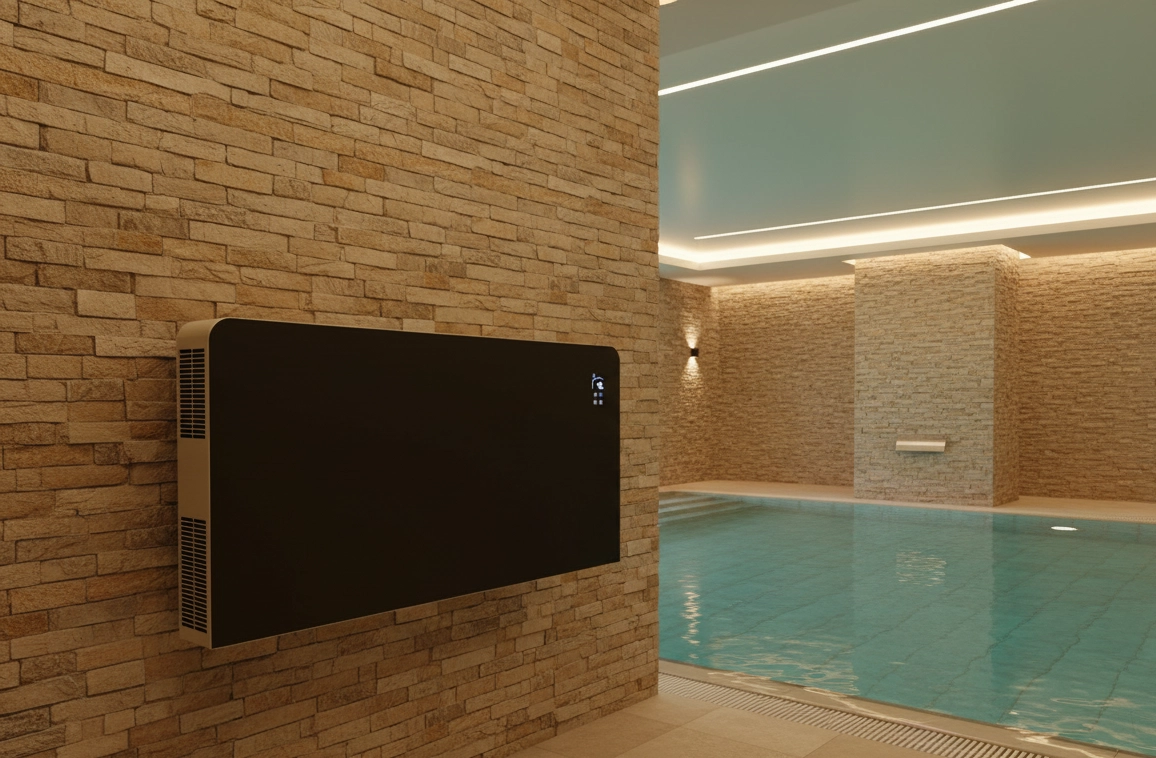
Refrigerant condensing dehumidifiers operate by cooling air below its dew point, causing moisture to condense. The evaporator temperature is a key operating parameter that determines process efficiency. A physical limitation for such systems is around +5°C, since below this threshold heat exchangers begin to frost over.
The coefficient of performance (COP) of a refrigerant dehumidifier is defined as the ratio of useful cooling to energy input and is highly dependent on temperature conditions. Typical COP values range from 0.1 to 0.6 depending on operating conditions. For example, at an outdoor temperature of 33°C (92°F) and indoor 24°C (75°F), the COP may be about 0.231.
Raising the evaporator temperature has a significant impact on energy efficiency. Every 5°F (approximately 2.8°C) increase in evaporator temperature can increase COP by 10–15%. However, this comes at the cost of reduced moisture removal capacity.
Seasonal temperature fluctuations significantly affect the performance of refrigerant dehumidifiers. In summer at 25°C the system may deliver a capacity of 100 liters per day, whereas in winter at 5°C the same system may drop to 60–70 liters per day.
Dew-point temperature is a critical parameter in designing refrigeration dehumidification systems. For example, air at 21°C (70°F) and 50% relative humidity has a dew point of about 10°C (50°F), meaning any surface below 10°C will condense moisture.
For refrigerant dehumidifiers, the optimal operating range is considered to be 15–25°C. In this range the best balance between performance and energy efficiency is achieved. With an evaporator temperature of +10°C instead of +5°C, capacity may drop by 15%, but COP will increase by 25%, which often yields overall energy savings.
Adsorption desiccant dehumidifiers
Adsorption dehumidifiers exhibit the opposite temperature dependence compared with refrigeration systems. Lowering the process air temperature increases the effectiveness of moisture removal. According to technical dehumidification manuals, at an inlet temperature of 21°C (70°F) the system removes moisture to 13 grains per pound at the outlet, whereas reducing the inlet temperature to 18°C (65°F) lowers the outlet to 9 grains per pound.
The physical explanation is that a colder desiccant has a lower surface vapor pressure, creating a larger gradient for moisture transfer from the air. Detailed calculations show that a 2.8°C (5°F) reduction in the 15–26°C (60–80°F) range can improve moisture removal by 20–30%.
A key advantage of adsorption systems emerges below +5°C, where refrigeration systems become ineffective due to icing. Desiccant dehumidifiers maintain high effectiveness even at subzero temperatures, making them ideal for cold rooms and unheated spaces in winter.
Regeneration temperature is a critical parameter for adsorption systems. To desorb moisture from the desiccant surface, a high temperature is required to raise the vapor pressure at the material surface above that of the surrounding air. Typical regeneration temperature ranges are 50°C to 140°C (120–280°F), depending on the type of desiccant.
Different desiccants have different temperature requirements:
- Silica gel: regeneration at 120–150°C, maximum allowable temperature up to 300°C
- Molecular sieves: regeneration at 150–180°C
- Lithium chloride: regeneration at 150–200°C with mandatory full regeneration due to the risk of liquid solution leakage
Regeneration temperature directly affects the depth of drying. At a regeneration temperature of 88°C (190°F) and inlet process air of 18°C (65°F) with 95 grains per pound, the system can deliver 27 grains per pound at the outlet. Reducing the regeneration temperature to 77°C (170°F) will necessitate larger equipment or lower system performance.
Temperature performance curves and practical calculations
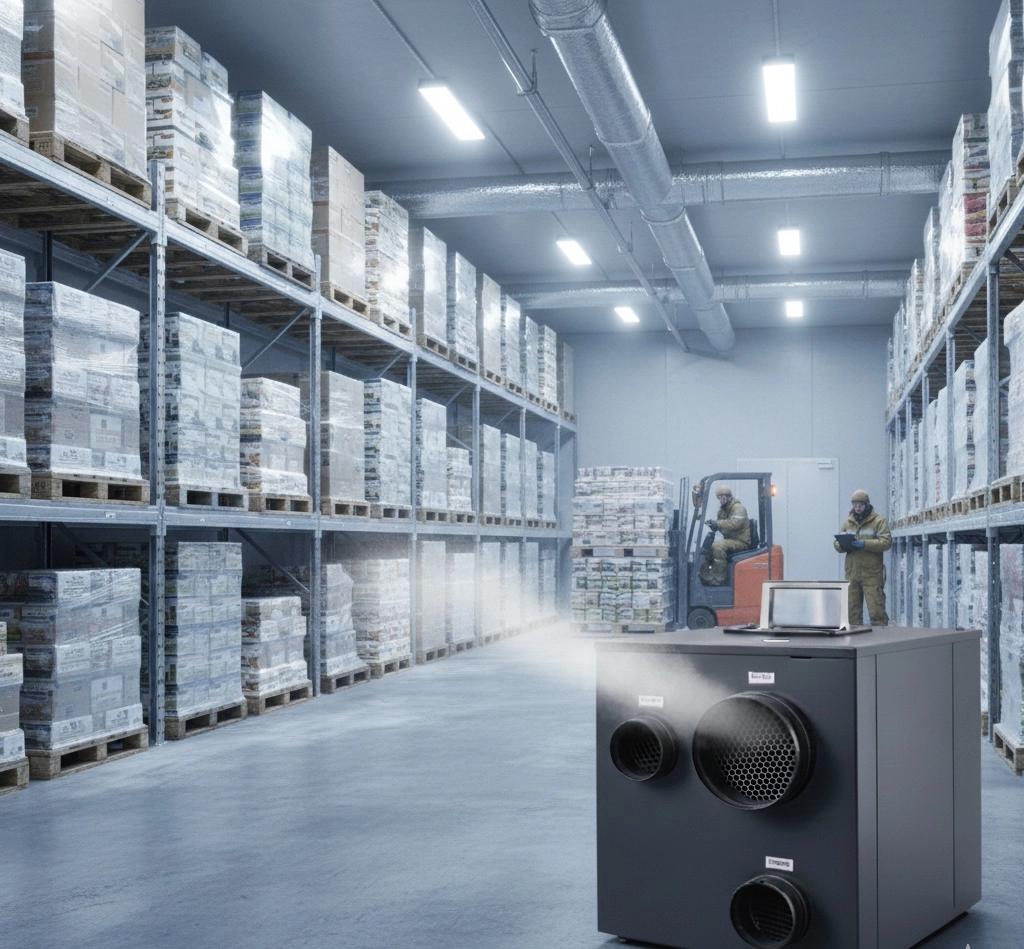
Temperature performance curves are an important tool for designing dehumidification systems. They show the dependence of system performance on temperature, humidity, and air velocity. To use these curves correctly, the engineer must understand interpolation methods for intermediate values and the application of temperature correction factors.
Typical dehumidification applications have different temperature regimes:
- Warehouse: temperature 20°C, relative humidity 60%
- Swimming pool: temperature 28°C, relative humidity 60%
- Pharmaceutical manufacturing: temperature 22°C, relative humidity 30%
- Cold room: temperature +2°C for condensation control
Seasonal temperature variations and design for changing conditions
The annual temperature profile has a significant impact on the operation of dehumidification systems. Summer peaks are characterized by maximum moisture load at high temperatures, whereas winter is marked by cold, dry air and reduced load. Shoulder seasons (spring, autumn) often provide optimal conditions in terms of energy efficiency.
Refrigeration systems in winter face the risk of overcooling and icing, which requires cycling or power modulation. Adsorption systems in winter require adjustment of regeneration heater power due to lower inlet air temperature.
The energy balance for regeneration heaters can be calculated using:
Power = SCFM × 1.08 × ΔT
where SCFM is the air flow rate, and ΔT is the required temperature rise. For example, if in summer the inlet air temperature is 33°C (92°F) and in winter 0°C (32°F), then to achieve the same regeneration temperature in winter a significantly higher heater power is required.
Thermal integration of systems and energy-efficient solutions
Stepwise multistage regeneration can significantly increase the energy efficiency of adsorption systems. The first stage removes 70–80% of moisture at a low regeneration temperature (80–100°C), the second stage completes drying with high-temperature heat (150–180°C). This scheme allows energy cost savings because low-temperature heat is often cheaper.
Using waste heat from other processes for desiccant regeneration also increases the overall efficiency of the system. Heat sources can include cogeneration systems, refrigeration condensers, industrial processes with high-temperature exhausts, etc.
Pre-cooling before adsorption is advisable at high summer temperatures. For example, in confectionery manufacturing, air at 33°C (91°F) and 146 grains per pound can be cooled to 18°C (65°F) and 92 grains per pound, which significantly increases the effectiveness of adsorption dehumidification. However, it is necessary to balance the cost of cooling against the gain in performance.
Post-cooling of process air is necessary in comfort HVAC systems because adsorption dehumidification raises air temperature due to the heat of adsorption. This can be implemented via water coils, evaporative coolers, or integration with the main air-conditioning system.
Temperature design strategies for different applications
For swimming pools, an optimal air operating temperature is 28–30°C with a water temperature of 26–28°C. High humidity (60–70% RH) requires effective dehumidification, and the choice between refrigeration and adsorption systems depends on specific conditions and dew-point requirements.
Warehouses and logistics facilities are characterized by a wide temperature range: from −20°C to +30°C. In cold warehouses, adsorption systems are preferred, as they effectively prevent condensation on cold goods. Dew-point calculation is critical for proper dehumidification system design.
Pharmaceutical manufacturing requires strict temperature tolerances (20–25°C ±2°C) and low relative humidity (30–40% RH). For such conditions, adsorption systems with precision control and temperature stabilization after dehumidification are optimal.
In the food industry, temperature zones range from cold rooms to hot workshops. The relationship between temperature and product quality requires careful selection of dehumidification systems. For example, for drying fish, an optimal temperature is 20–25°C, which helps preserve product quality.

Air leakage and temperature gradients as engineering challenges
Leakage between process and regeneration is a serious mechanical issue in rotary systems. For example, with a process air flow of 500 CFM plus 20 CFM leakage at 120 grains per pound, the outlet humidity can worsen from 1 to 5.5 grains per pound. Thermal expansion can aggravate leakage, so proper seal design and control of pressure differentials are important.
Temperature stratification in the desiccant bed leads to non-uniform temperature through the bed depth, which affects adsorption efficiency. Optimizing bed depth and flow velocity helps minimize this effect.
Carryover of residual heat is related to the mass of desiccant and its heat capacity. For effective operation, cooling the desiccant before returning it to the process is necessary, which is implemented via dedicated cooling sections in rotary systems.
Instrumentation and temperature control
Various types of sensors are used for effective temperature control in dehumidification systems: thermocouples, thermistors, RTDs. Key locations are the inlets and outlets of the process and regeneration air, as well as the desiccant surface.
Temperature compensation in control algorithms allows the system to adapt to changing external conditions. PID control with temperature corrections, feedforward control based on temperature forecasts, and adaptive algorithms for seasonal changes ensure optimal operation throughout the year.
Emergency temperature limits are an important safety element. Systems must protect the desiccant from overheating, prevent icing in refrigeration systems, and automatically shut down when critical temperatures are reached.
Common design mistakes and their consequences
Underestimating seasonal fluctuations is a common mistake that leads to designing the system only for summer peaks. This often results in insufficient regeneration heater capacity in winter and reduced performance in the cold period. To avoid this mistake, annual load calculations must be performed.
An incorrect choice of regeneration temperature also critically affects system efficiency. Too low a temperature leads to incomplete regeneration and gradual degradation of performance, while too high a temperature wastes energy and may damage the desiccant. The correct temperature choice should consider the type of desiccant and manufacturer recommendations.
Ignoring dew-point temperature can lead to condensation in the ductwork of cold systems, causing corrosion, microbiological issues, and equipment damage. To prevent these problems, the dew point must be calculated for all system zones.
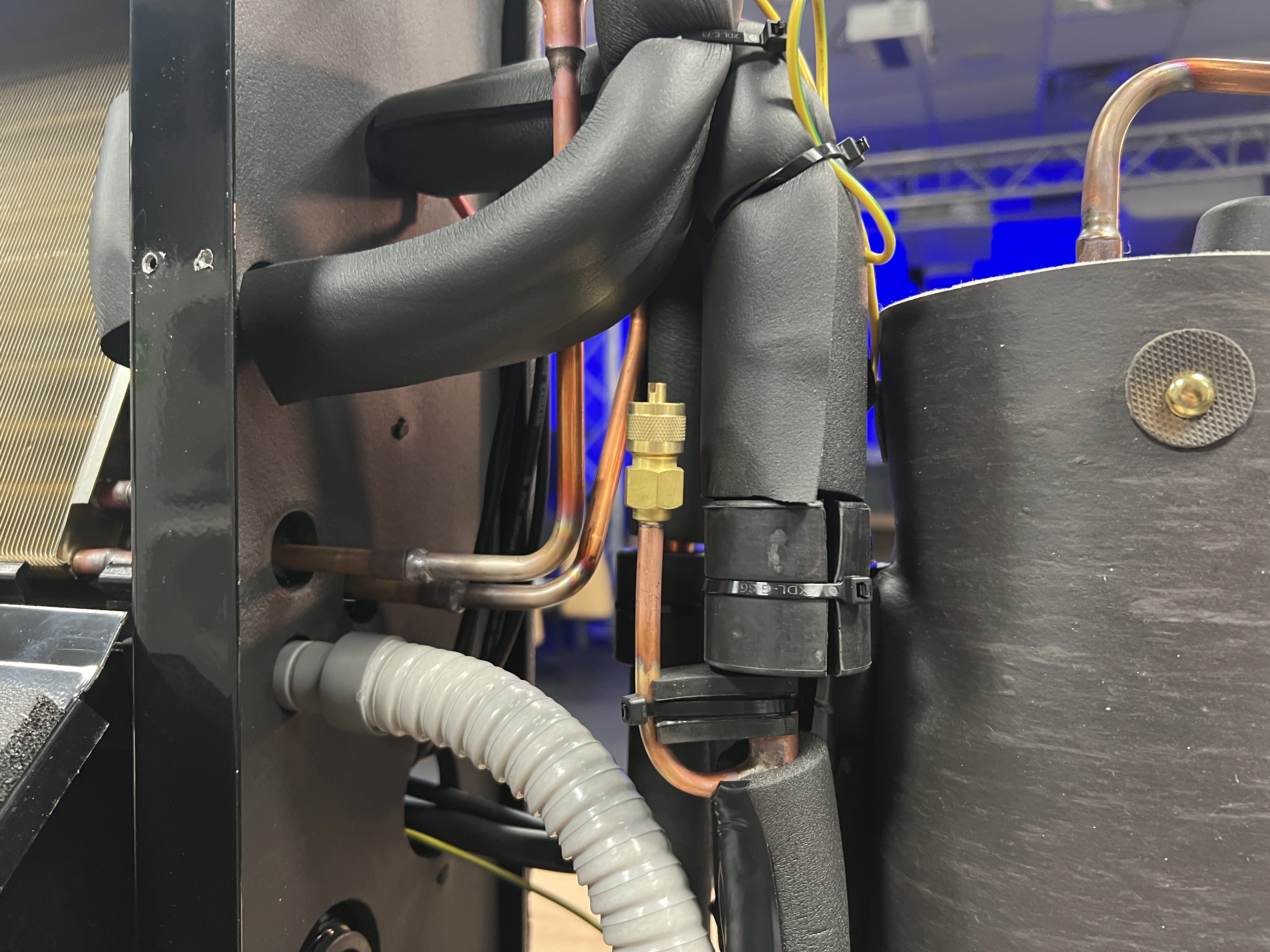
Lack of evaporator temperature control in refrigerant dehumidifiers can lead to icing, reduced performance, and increased energy consumption for defrost cycles. Automatic evaporator temperature control helps avoid these problems.
Failing to account for the temperature rise after adsorption can cause space overheating in comfort systems or incompatibility with process requirements. A full psychrometric calculation of the system allows these effects to be anticipated and the necessary post-cooling to be planned.
Future technologies and research
New-generation low-temperature desiccants allow regeneration at 60–80°C, opening opportunities to use renewable energy sources such as solar collectors. This significantly expands the possibilities for energy-efficient solutions.
Improved refrigerants provide operation at lower evaporator temperatures and higher COP under various temperature conditions. Environmental safety is also an important factor in the development of new refrigerants.
Hybrid temperature strategies that combine refrigeration and adsorption methods make it possible to optimize system operation depending on temperature conditions. Automatic switching between operating modes and real-time optimization based on energy cost provide maximum efficiency.
Frequently asked questions (FAQ)
Why do refrigerant dehumidifiers not work at temperatures below plus 5°C, and what alternatives exist for cold spaces?
Refrigerant dehumidifiers have a physical limitation at low temperatures due to evaporator icing. Below +5°C, moisture that condenses on the heat exchanger freezes, forming a layer of ice that blocks heat transfer and airflow. The critical temperature is determined by the air dew point and the evaporator surface temperature. Calculations show that for safe operation the evaporator temperature should not be lower than +1°C, and considering the temperature difference between the refrigerant and the surface, the air temperature should not be below +5°C. An alternative for cold spaces is adsorption dehumidifiers, which operate effectively even at subzero temperatures. Hybrid solutions are also used, where adsorption systems are used for low-temperature zones and refrigeration systems for zones with normal temperatures.
How to determine the optimal regeneration temperature for a silica gel adsorption dehumidifier, and why shouldn’t the maximum possible temperature be used?
The optimal regeneration temperature for silica gel is usually 120–150°C. Although silica gel can withstand temperatures up to 300°C, using the maximum possible temperature is not recommended for several reasons. First, there is a balance between effectiveness and energy cost—each additional 10°C provides diminishing returns in effectiveness while increasing energy consumption. Calculations show that increasing the temperature from 130°C to 150°C may yield only a 5–10% gain in effectiveness while increasing energy consumption by 15–20%. Second, high temperature accelerates desiccant aging, reducing its service life. A more effective approach is staged regeneration, where 70–80% of moisture is removed at a lower temperature (80–100°C), and final drying is performed at a higher temperature, which significantly saves energy.
Is it always necessary to cool the air before an adsorption dehumidifier, and how to calculate the economic point of pre-cooling?
Pre-cooling the air before an adsorption dehumidifier is not always necessary, but it can be economically advisable under certain conditions, especially at high temperatures. To calculate the economic point, you need to compare the cost of cooling with the benefit of increased performance. For example, lowering temperature from 30°C to 20°C can increase adsorption effectiveness by 30–40%. The calculation includes: 1) Determining the additional capacity (kg of water/hour) at the reduced temperature; 2) Calculating the energy required for cooling (kW); 3) Comparing the specific energy of dehumidification (kWh/kg of water) with and without pre-cooling. In summer conditions, cooling is often justified—for instance, reducing temperature from 33°C to 18°C can double adsorption effectiveness. In winter, when the temperature is already low, pre-cooling is usually unnecessary.
How does outdoor air temperature affect the energy consumption of different types of dehumidification systems throughout the year?
Outdoor air temperature significantly affects the energy consumption of dehumidification systems over the year. Refrigeration systems show a nonlinear dependence—their COP decreases both at very high summer temperatures (due to high condensation pressure) and at low winter temperatures (due to low load and frequent cycling). The optimal range for them is 15–25°C, where the highest COP is achieved. The annual consumption profile has a U-shaped form with a minimum in the shoulder seasons. Adsorption systems have a different energy profile. Their adsorption effectiveness increases at low temperatures but they require more energy for regeneration due to colder inlet air. For example, if in summer air needs to be heated from 30°C to 120°C (ΔT=90°C), then in winter from −10°C to 120°C (ΔT=130°C), which increases energy consumption by 45%. Geographic differences are also significant—continental climates have more pronounced seasonal swings than maritime climates.
What is the difference in COP efficiency of refrigeration and adsorption systems at temperatures plus 5°C, plus 15°C, plus 25°C, and plus 35°C?
Refrigeration and adsorption systems have different COP characteristics depending on temperature:
| Temperature | COP of refrigeration systems | COP of adsorption systems | Optimal choice |
|---|---|---|---|
| +5°C | 0.2–0.3 | 0.4–0.5 | Adsorption |
| +15°C | 0.3–0.5 | 0.35–0.45 | Depends on requirements |
| +25°C | 0.4–0.6 | 0.3–0.4 | Refrigeration |
| +35°C | 0.3–0.4 | 0.25–0.35 | Refrigeration |
At +5°C, adsorption systems have significantly higher effectiveness due to the critical limitation of refrigeration systems—evaporator icing. At +15°C the systems have similar effectiveness, and the choice depends on other factors such as dew-point requirements. At +25°C and +35°C refrigeration systems are more efficient, although at +35°C their COP decreases due to high condensation pressure. The switchover point between technologies is usually in the 10–15°C range, though it may differ for specific applications.
Conclusions
Temperature is a fundamental parameter that determines the effectiveness of air dehumidification systems. Refrigeration systems have an optimal operating temperature range of 15–25°C with a limitation in effectiveness below +5°C due to icing risk. Their COP typically lies between 0.2 and 0.6, depending on temperature conditions. Adsorption systems show better performance at low process air temperatures and require high-temperature regeneration (120–200°C) for effective operation.
When choosing the type of dehumidification system, the primary factor is the operating temperature range. For cold spaces and processes with temperatures below +5°C, adsorption systems are recommended, whereas for comfort conditions at 20–25°C refrigeration systems will be more efficient. It is also important to consider available energy sources and their temperature parameters, especially for regeneration of adsorption systems.
To maximize the efficiency of dehumidification systems, it is necessary to:
- Design the system for the full range of temperatures over the annual cycle
- Provide the ability to modulate regeneration temperature
- Use temperature compensation in control systems
- Plan thermal integration at the design stage
- Consider dew-point temperature in all system elements
The economic effectiveness of temperature solutions is determined by the balance between capital and operating costs. Investments in energy-efficient solutions, such as staged regeneration or the use of waste heat, usually have a good payback period and ensure stable operation over a long period.
Future development of dehumidification technologies is aimed at creating intelligent systems that adapt to temperature conditions, integrating with weather forecasting systems, and using artificial intelligence to optimize temperature regimes, which will enable even higher efficiency and economy.


