









































Author: Mycond Technical Department
Designing effective indoor climate systems requires an accurate accounting of all moisture sources in a space. Underestimating moisture gains is one of the most common causes of condensation, corrosion, excessive energy consumption, and premature equipment wear. Let’s consider a comprehensive approach to identifying, evaluating, and calculating all significant sources of moisture in buildings of various types.
Introduction: consequences of incomplete accounting of moisture sources
A typical design error when calculating air conditioning and dehumidification systems is to account for only 1–2 main moisture sources while ignoring others. Such underestimation has serious consequences: condensation on cold surfaces, corrosion of metal elements, excessive energy use for dehumidification, emergency equipment wear, and mold with microbiological contamination.
An engineering approach requires systematically accounting for all seven main categories of moisture sources: infiltration through the building envelope, moisture emission from people, open doors and gates, wet products and materials, open water surfaces, supply ventilation, and technological processes. Only comprehensive accounting makes it possible to create a reliable, energy-efficient system with optimal indoor climate parameters.
Physical fundamentals of water vapor mass transfer
For the correct calculation of moisture gains, it is necessary to understand basic psychrometric parameters: humidity ratio (g/kg of dry air), relative humidity (%), and dew point temperature. The difference in humidity ratio between different media is the main driving force of moisture transfer.
The intensity of water vapor mass transfer depends on three key factors:
- Difference in humidity ratio or partial pressure of water vapor
- Temperature gradient between media
- Air velocity at the interface between media
As temperature rises, the intensity of moisture transfer increases significantly because the amount of water vapor that air can hold increases. This principle is crucial when calculating evaporation from open water surfaces and moisture release from materials.
Source 1: infiltration of humid air through building envelopes
The mechanism of external humid air ingress occurs through cracks, leaks, and insufficiently sealed openings in enclosing structures. This factor becomes especially critical in humid summer climates when the outdoor humidity ratio significantly exceeds the indoor value.
The method for calculating moisture gains from infiltration is based on a formula where the mass of water vapor is determined as the product of the mass flow of infiltrating air and the difference in humidity ratio between outdoor and indoor air:
G(moisture) = G(air) × (d(outdoor) - d(indoor))
The intensity of infiltration depends on wind pressure, temperature difference (creating a stack effect), and the building’s airtightness class. In humid summer climates, infiltration can account for 40–60% of total moisture gains, although the exact value depends on specific project conditions.
Source 2: moisture emission from people
The physiological mechanism of human moisture release includes two main processes: breathing (air saturated with water vapor is exhaled at a temperature of about 37°C) and sweating. The intensity of moisture release depends significantly on:
- Physical activity (rest, light work, intensive load)
- Room temperature (the higher the temperature, the more sweating)
- Clothing (limits sweat evaporation)
Calculations use standard specific moisture release values for different types of spaces: offices, gyms, production shops, and retail halls. The moisture emission from one person ranges from 40 g/h (at rest in a cool room) to 300 g/h (intense physical activity). For each specific site, this value is refined during design.
Source 3: open doors, gates, loading docks
When doors and gates are opened, water vapor mass transfer occurs via two main mechanisms: free convection due to air density differences and forced air exchange due to the movement of people and vehicles. Particular attention should be paid to large warehouse gates (10–20 m²) that remain open for extended periods (2–5 minutes).
The method for estimating moisture gains includes calculation using the formula:
G(moisture) = V(air) × ρ(air) × (d(outdoor) - d(indoor)) × n
where V(air) is the volume of air entering per opening, ρ(air) is air density, d is humidity ratio, and n is the opening frequency per hour.
The calculation algorithm includes three steps: determining the opening area, estimating opening frequency, and calculating the mass of moisture per hour. Specific values depend on the characteristics of the site and its operating mode.
Source 4: wet products and materials
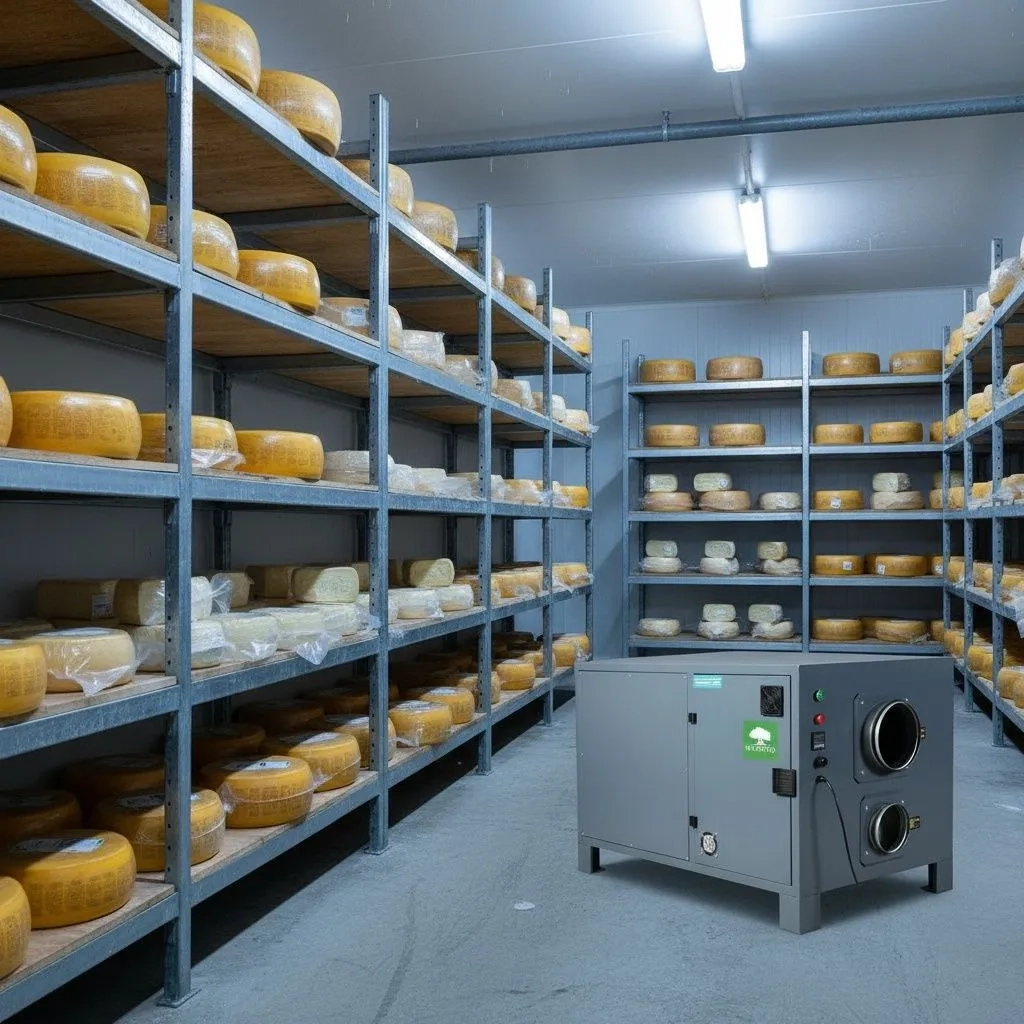
Significant moisture release occurs from food products (vegetables, fruits, meat, fish), building materials (fresh concrete, plaster), as well as textiles and paper. The intensity of moisture release depends on:
- Product storage temperature
- Airflow velocity around the product
- Initial moisture content of the product or material
There are three main methods to estimate moisture release:
- By mass change of the product during storage
- Using empirical moisture release coefficients
- Based on drying kinetics
For calculating moisture gains in vegetable stores, cold rooms, and building material warehouses, empirical relationships are used, although specific figures are always indicative and depend on the specific site conditions.
Source 5: open water surfaces
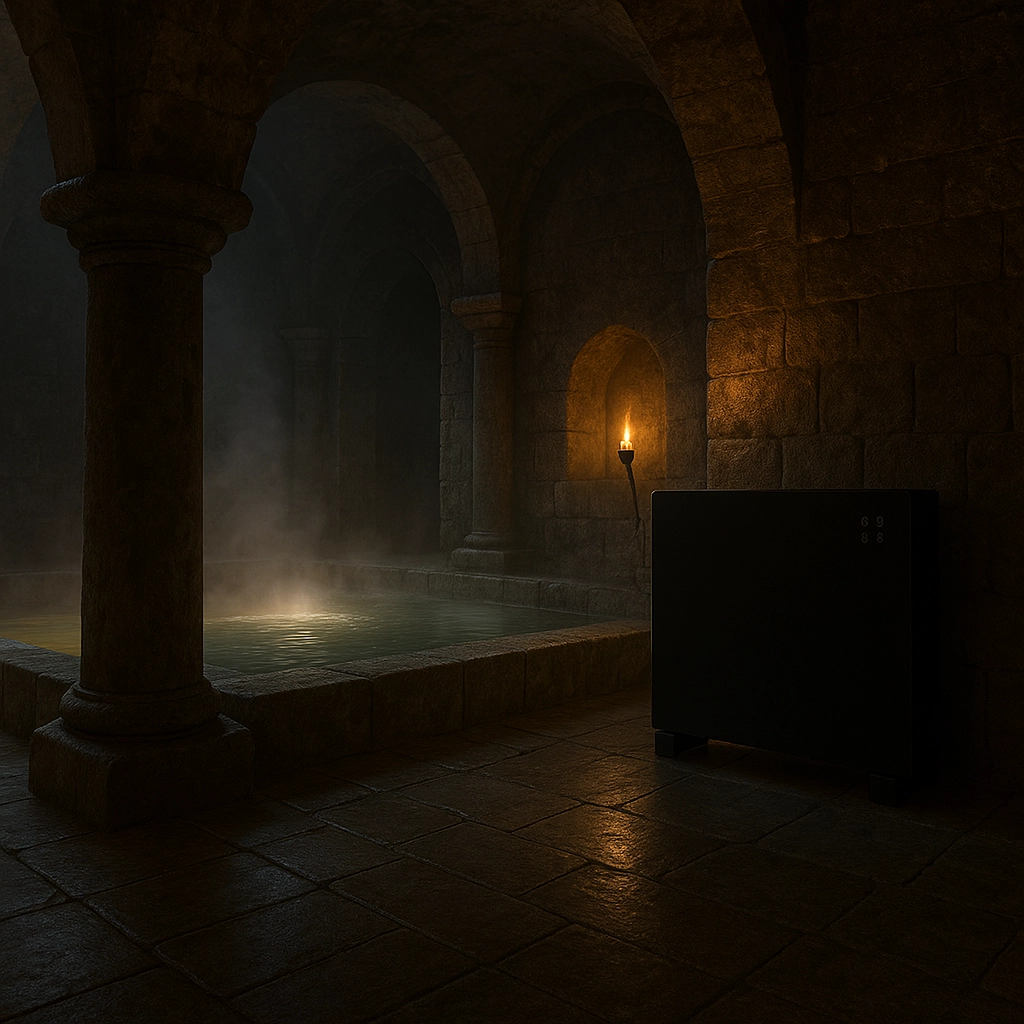
Pools, tanks, and process baths are powerful moisture sources due to evaporation. The physics of this process is related to the mass transfer of water vapor from the water surface to the air. The evaporation intensity is determined by empirical formulas and depends on:
- Water temperature
- Air temperature and relative humidity above the surface
- Air velocity
The calculation algorithm includes determining the water surface area, measuring water and air temperatures, calculating the difference in saturated vapor pressures, and applying the evaporation formula. For pools with water temperatures of 26–30°C, electroplating baths, and laundry equipment, calculations are carried out taking into account their specific use.
Sources 6 and 7: supply ventilation and technological processes
Supply ventilation without proper air treatment can be a significant source of moisture, especially in the warm season. Moisture gains from ventilation are calculated by the formula:
G(moisture) = G(air) × (d(outdoor) - d(indoor))
where G(air) is the mass flow rate of supply air (kg/h).
Technological processes also often create significant moisture gains: equipment washing, laundry, industrial drying, boiling, and steaming. The method for inventorying such sources includes:
- Listing all technological processes involving water or steam
- Estimating water/steam consumption for each process
- Converting to the mass of water vapor per hour
In some industries, technological moisture releases can account for up to 70–80% of total moisture gains, making their proper assessment critically important.
Total moisture gains: calculation method and common design errors
Total moisture gains are determined by a clear algorithm:
- Inventory of all possible moisture sources at the site
- Calculation of moisture gains from each source separately
- Summation of all components
- Adding a 10–20% allowance for unaccounted factors (the percentage depends on the degree of uncertainty)
Typical design errors leading to underestimation of moisture gains:
- Ignoring infiltration, especially in humid summer climates
- Using outdated standards for moisture release from people
- Lack of seasonal correction in calculations
- Applying fixed values without tying them to the specific site
There are conditions where standard calculation methods do not work properly: extreme climatic conditions (tropical climate, coastal zones with relative humidity of 90–100%), complex technological processes with unstable moisture emissions, and sites with irregular operation.
In such cases, instrumental verification is recommended: for large warehouse complexes with frequent gate openings, pools with a non-standard operating mode, and production shops with unknown technological moisture emissions.
FAQ: Frequently asked questions
How to determine the priority of accounting for moisture sources?
Priority depends on the building type. For offices, the most important sources are people and infiltration. For industrial facilities, technological processes and open gates dominate. For pools, evaporation from the water surface is key. It is recommended to first conduct a preliminary assessment of all sources, and then focus on the 2–3 largest while still monitoring the others.
Can fixed specific values of moisture gains from handbooks be used?
Reference values can be used only for an initial assessment. For precise design, calculations must be adapted to the specific conditions of the site. For example, moisture emission from people ranges from 40 to 300 g/h depending on activity and temperature; it is not a fixed value.
How to account for seasonal changes in moisture gains from infiltration?
It is necessary to perform calculations for different seasons using climatic data for your region. In humid summer climates, infiltration usually increases moisture gains, while in winter in continental climates it reduces them. It is important to calculate the moisture balance for characteristic points of the annual cycle (winter, spring, summer, autumn).
Is a capacity margin beyond the calculated moisture gains necessary?
Yes, a capacity margin is necessary for several reasons: uncertainty of initial data, possible changes in operating modes in the future, and the need for a rapid pull-down after interruptions. Recommended margin: 15–20% for standard conditions, 25–30% for sites with a high degree of uncertainty, up to 50% for mission-critical applications.
Conclusions
Accurate calculation of moisture gains is the foundation for creating effective air conditioning and dehumidification systems. Key principles to follow:
- Comprehensive accounting of all moisture sources without exception
- Adapting calculations to the specific site
- Accounting for seasonal variability of moisture gains
Recommendations for design engineers:
- Carry out a detailed inventory of all potential moisture sources
- Do not rely solely on reference values
- Include a justified capacity margin for equipment
- Provide for the possibility of instrumental measurement at the operation stage
It is important to remember: the accuracy of moisture gain calculations determines not only indoor comfort and safety but also the reliability and cost-effectiveness of the entire air conditioning and dehumidification system. Underestimating moisture gains leads to costly consequences, while excessive margins create unjustified capital and operating expenses.


